Case-scoped forensic face search · built for Canadian law
Police search camera footage for one person, in one authorized case — and only with each camera owner's approval. When the case closes, the footage and face data are deleted. No always-on surveillance. No citywide face database.
After an incident, officers canvass door to door and ask each owner to find the clip, download it, and hand it over — a USB stick, an email, a text. Days of it. Meanwhile most home cameras overwrite their storage in about 24 hours. The evidence is routinely gone before the canvass gets there — for the police and for the family.
Then it records over everything. Whatever was not collected no longer exists.
Casebound deletes the download-and-send step. One request reaches every registered camera at once; the owner approves from their phone; the footage is in the case in minutes, not days — while it still exists.
A forensic tool with the paperwork built in — the legal authority is recorded before the first frame is processed, and every step lands in the audit log on its own.
Registered doorbells, driveways, storefronts, transit and city cameras — plotted on the live street map. Pick the cameras around the incident and send one access request for the exact footage window you need. No door-to-door. No absent owners — the request goes to the owner online, wherever they are, and their approval from a phone takes minutes.
REQUEST → OWNER'S PHONEONE CASEONE WINDOW
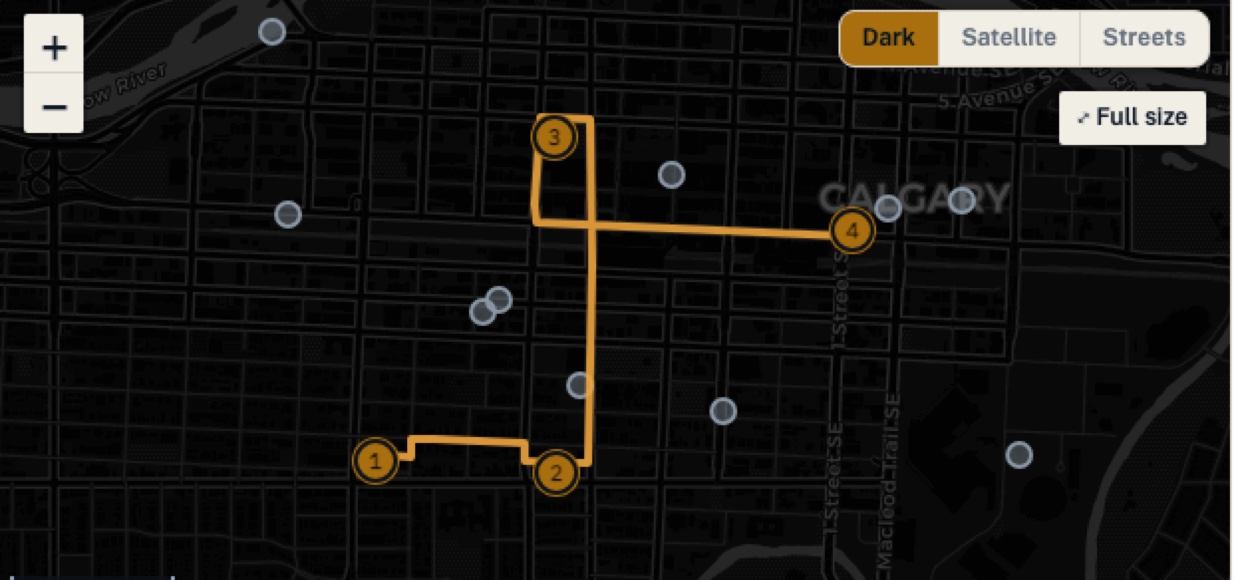
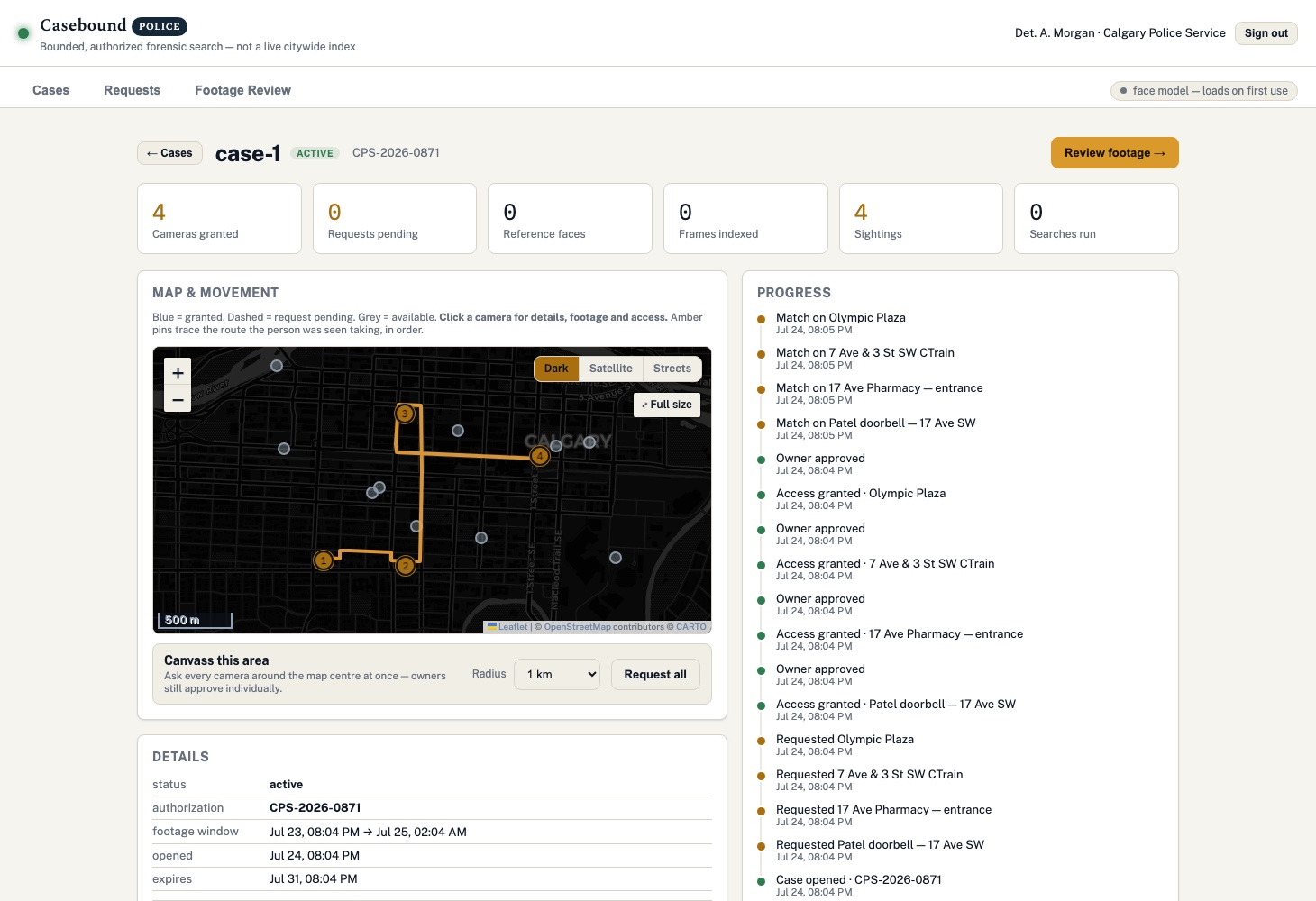
Each sighting drops a pin; Casebound connects the movement along the actual roads, in time order, so the route someone took across the city reads at a glance — which way they came, where they went, which camera to request next.
Enroll a reference photo when you open the case; search runs only inside that case's footage and returns ranked leads with similarity scores — never automated identifications. Every search and every viewed lead lands in the case record.
A MATCH IS A LEADA PERSON REVIEWS ITEVERY SEARCH LOGGED
Open, request, consent, search, view, export, close, purge — every action is recorded with who did it and when. The same trail that stands up in court is the one that shows the public exactly how a case was handled.
DISCOVERABLEDEFENSIBLEEXPORTABLE
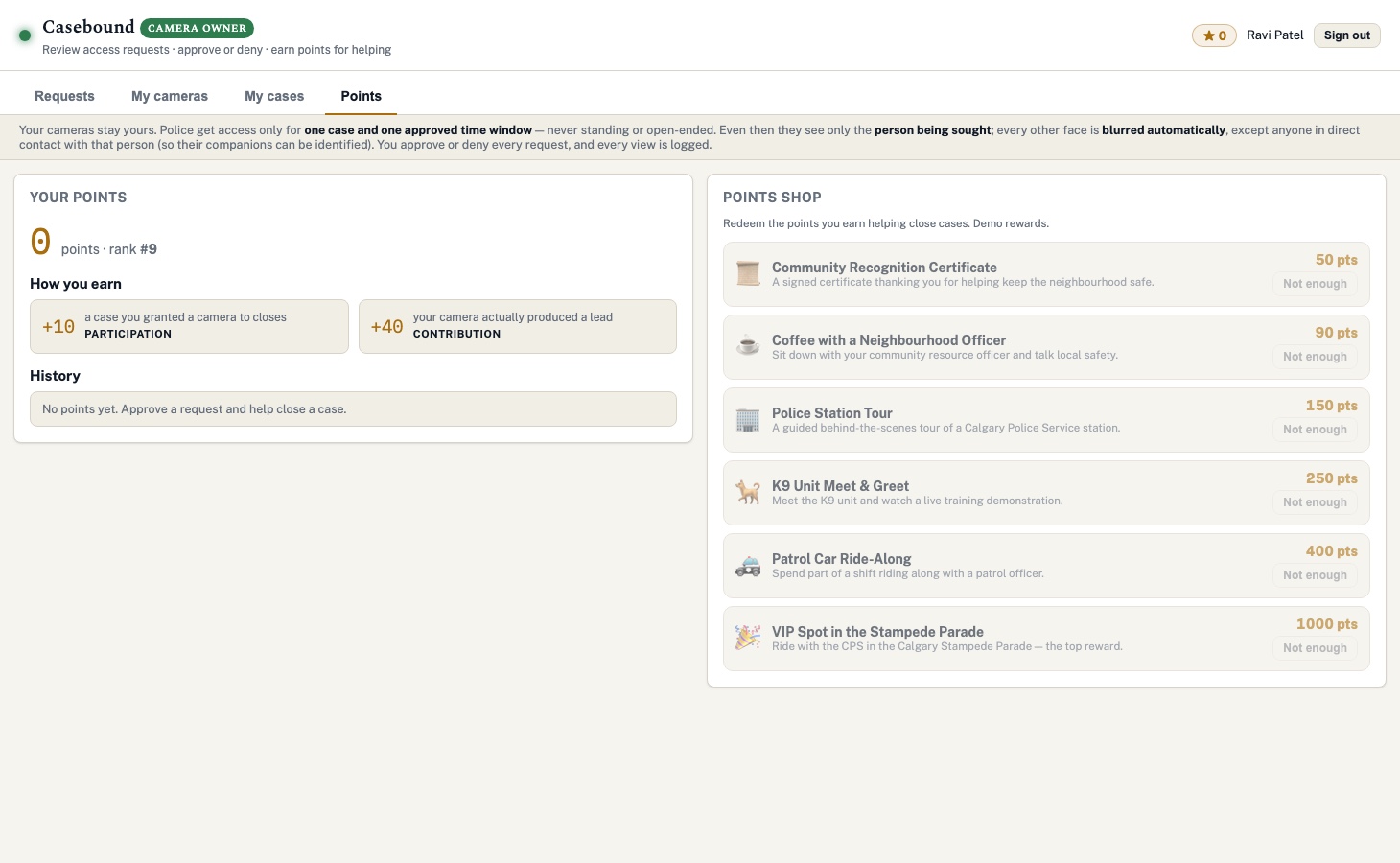
Registering your doorbell or storefront camera just puts its location on the map — nothing else. Footage moves only when you approve a specific case, for a specific time window. Here's exactly what protects you:
the one person police may look for
Police never see your camera outside the window you approve. Inside it, they see only the one person from that case — and anyone that person meets or hands something to, so an accomplice can't hide behind the blur. Every other face — your family, your customers, your neighbours — is blurred automatically. No photo of a suspect on file? Then every face stays blurred.
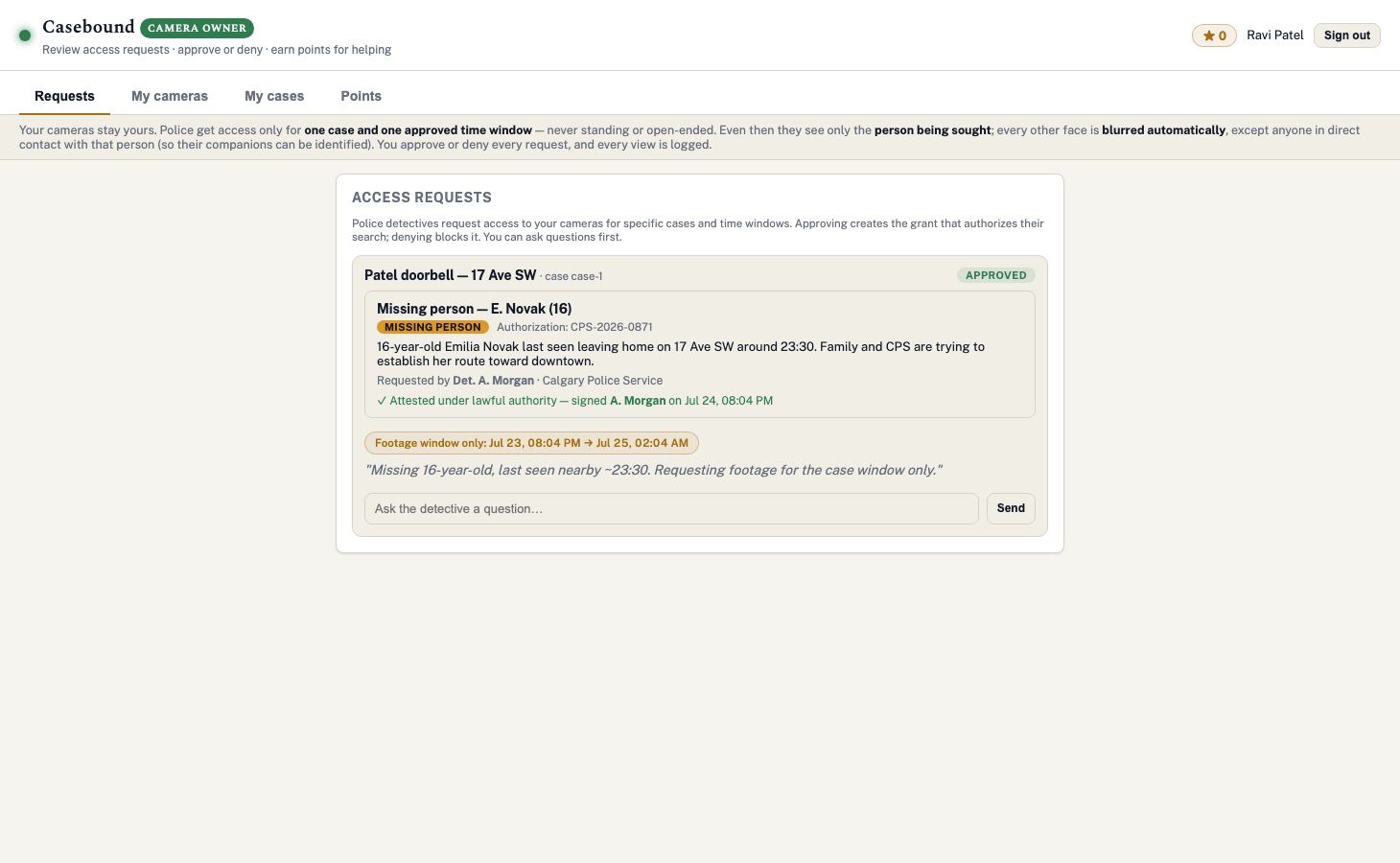
Approve or deny every request — ask the detective questions first, in writing. A no ends the request, and nothing else happens. Your portal shows a live list per camera: which case has access, to what window, and when it ends. When the case closes, access and data end with it.
And it works for you, too: when something happens on your street, police can reach the cameras around your home in minutes — while the footage still exists, instead of days later when it's already been recorded over.
Close a case you helped with and you earn points, with more when your camera produced the lead. Redeem them for rewards from a catalogue set with your city and police service. The Calgary pilot design:
The hinge between the two sides: only the owner's approval creates the grant that authorizes access. Police cannot self-grant a third party's camera — that rule is enforced in code, not in a policy binder.
The case is the unit of authorization. Step through the lifecycle — the receipt on the right grows at every step, and it is the only thing left at the end.
Steps advance on their own — click any step to jump. The scene is illustrative; the mechanics are the shipped ones: fail-closed gate, per-case index, owner-created grants, purge on close.
In 2021, Canada's federal and provincial privacy commissioners found Clearview AI's model unlawful: scrape everyone, keep everything, search anyone. The RCMP's use of it was found unlawful too. Any face-search tool built for Canadian policing starts from that finding — not from what the technology can do. Casebound is designed to break every factor of it.
“A face embedding is a biometric identifier. Removing the name column does not change that.”
— the design decision that rejected the always-on citywide index
Each technical control lines up with the requirement it supports under Charter s. 8, Alberta FOIP and PIPA, PIPEDA, and the 2022 joint guidance on police use of facial recognition. The code enforces what code can enforce. The rest is named, not hand-waved.
This is not legal advice. Compliance is conferred by the legal basis for each collection plus the governance around each use — not by software alone. The architecture's job is to make the lawful path the only path the code can take.
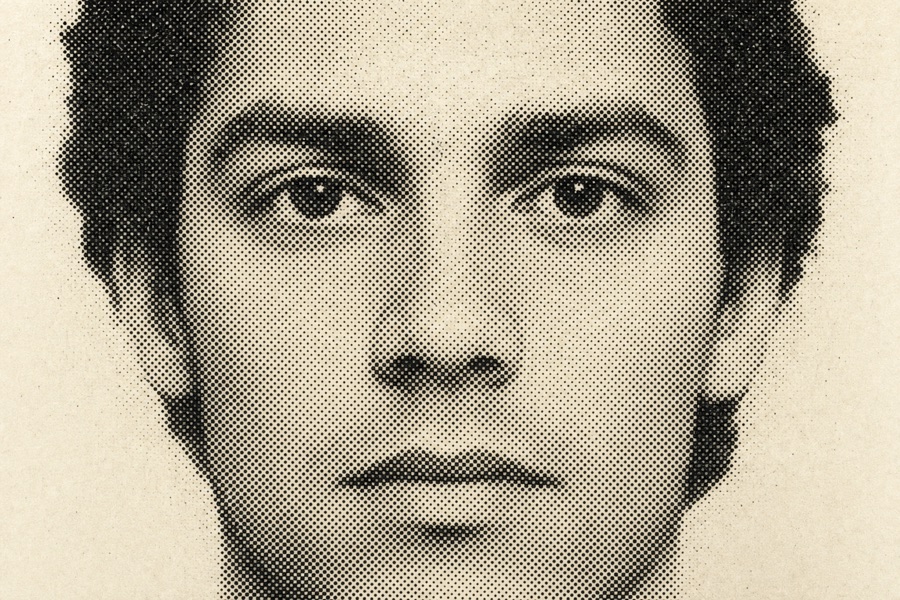
No inflated claims. The recognition core is real and measured — and its limits are documented, because your privacy officer will ask.
A real pretrained stack — detection, 68-point landmarks, deep recognition — running where the footage lives. Video never leaves your network.
At roughly 400 px face resolution, 6 of 6 matched. At harsh quality — 250 px with heavy JPEG — 3 of 6. That overlap is exactly why matches are leads for human review, never identifications.
Purge on close is enforced by the index itself — not by an operator remembering to delete.
Open, grant, enrol, search, match, close, purge — every one actor-stamped and append-only. Discoverable, defensible, exportable.
Every rollout runs through the same gates, together with your service — none of them are optional:
Police use of facial recognition remains legally unsettled in Canada. Casebound treats that as a design input — not a footnote.
Captured straight from the working product with a demonstration case: a missing 16-year-old, four cameras their owners approved, and the route her sightings traced across downtown.
The consent side of this system — the residents and businesses who share footage — is never charged and never will be. The investigating side pays, and every paid plan includes its hosting: the server the system runs on is inside the price, not a separate bill.
Goodwill is not a revenue line.
Minimum 5 seats. Month to month.
For a police service or municipal pilot.
There is no public rate card — pricing is negotiated with each pilot agency, and every paid plan includes its hosting. Every plan still runs the full deployment path above (counsel review, PIA, bias certification, human-review procedure); no tier skips a gate. The public demo stays free.
Sign in as a detective or as a camera owner. Open a case, request a camera, approve it from the other side, run a scoped search, close the case — and watch the purge land in the audit receipt.